
Start with the way the kitchen works now
Restaurants rarely run out of refrigeration all at once. It usually happens slowly. A second reach-in gets added because the first one is full. An under-counter unit solves a problem near the cook line. A new prep table makes lunch service easier. Then the menu grows, deliveries get larger, and employees start moving food between refrigerators simply to make everything fit.
At that point, buying another cooler may solve the problem, but it is worth taking a step back first. The better question is not only how much more refrigerated space the restaurant needs. It is what kind of space is missing and where it belongs.
We work on the full range of commercial refrigeration found in Taylor County kitchens, including reach-ins, prep tables, under-counter coolers, display equipment, remote systems, and walk-in coolers and freezers. That makes this less about choosing one appliance and more about figuring out how the kitchen should store food as the business changes. Browse refrigeration services and commercial refrigeration repair and installation for the equipment range.
The easiest time to see the problem is shortly after a delivery. Look at what gets put where and what employees have to move around to create room. If cases are being broken apart because there is nowhere to store them together, that points toward a bulk-storage problem. If cooks are constantly leaving the line to get backup ingredients, the restaurant may need more refrigeration closer to the prep area instead.
Those are not the same problem. A large walk-in can be useful for receiving and storing cases, but it does not replace the convenience of a properly located prep table during a busy service. In the same way, adding another reach-in to the line does not necessarily solve the problem if the real issue is that there is nowhere to put a large delivery.
It also helps to notice how often product gets moved from one refrigerator to another. If the morning crew is rearranging shelves to make room for lunch prep, then the evening crew moves everything again for dinner service, the kitchen may technically have enough cubic feet of refrigeration but still have a poor setup.
Another reach-in takes more than floor space
A reach-in is usually the simplest way to add refrigerated storage, but the open spot against the wall is not the only thing to consider. Employees need room to open the door and work around it. The unit needs the proper electrical setup and room for normal service. It also adds another condenser, another set of door gaskets, another drain where applicable, and another piece of equipment that has to be cleaned and maintained.
In a smaller restaurant, the effect on the kitchen layout can be significant. A cabinet that sticks into a narrow aisle can become frustrating very quickly during a dinner rush. Before ordering one, it is worth marking out the size of the proposed unit and seeing how people move around it during a normal shift.
Our commercial refrigeration work includes both equipment repair and new installations, and we note that installations involve startup checks, drainage checks where applicable, electrical verification, and scheduling around the business when possible. Bringing the refrigeration contractor into the conversation before the equipment is ordered can help identify issues with placement while they are still easy to change.
Local restaurants in Perry and nearby towns across the service area often share the same tight kitchen footprints, so layout notes matter as much as capacity numbers.
A walk-in solves a different problem
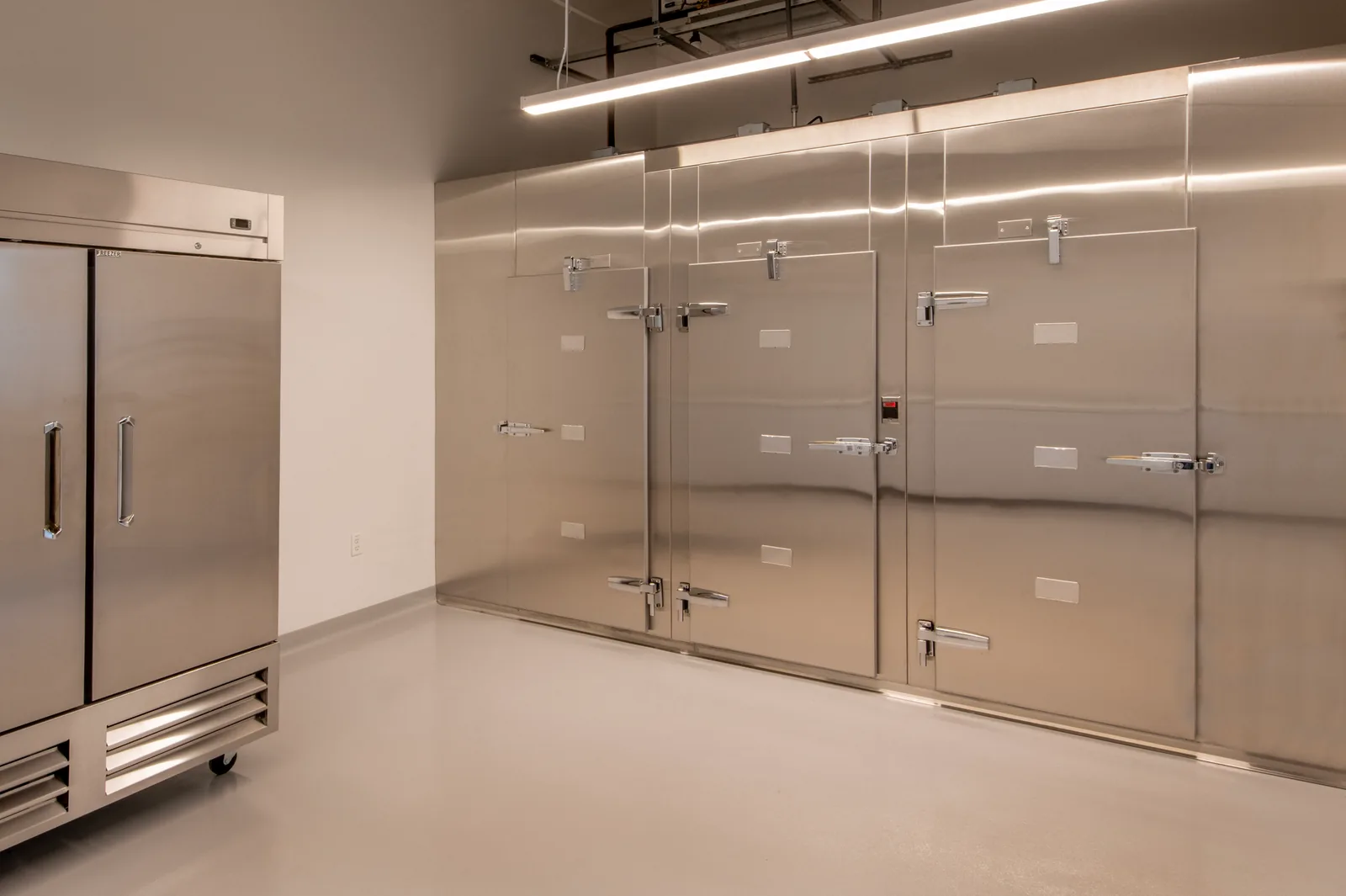
A walk-in cooler or freezer changes how a restaurant handles inventory. Instead of fitting cases into several cabinets, larger quantities can stay together and be organized on shelving. Backup ingredients can remain off the line until they are needed, which can free up prep refrigeration for the food employees are actively using.
That can make a major difference for restaurants that have grown into larger deliveries, more prep, catering, or a broader menu. It can also make receiving easier because the kitchen is no longer trying to squeeze an entire order into whatever empty shelves happen to be available that morning.
Still, a walk-in is not automatically the right next step. The restaurant needs enough room for the box and refrigeration equipment, and the proposed location has to make sense for deliveries and kitchen traffic. A walk-in on the opposite side of the building does not help much if the staff spends the entire shift walking back and forth for ingredients that should have been stored near the line.
We have a dedicated service for walk-in coolers and freezers in addition to our work on smaller commercial equipment. Restaurant owners can therefore look at bulk storage and line refrigeration as separate parts of the same kitchen instead of assuming one has to replace the other.
Keep the equipment that still does its job
A restaurant expansion does not mean every older piece of refrigeration should come out. A prep table that fits the line and holds temperature properly may still be exactly where it belongs. The same may be true of a reach-in that employees use throughout the day.
The better approach is to give each piece of equipment a clear job. One unit may handle raw ingredients, another may support the cook line, while a walk-in handles bulk storage and deliveries. Once those roles are clear, it becomes easier to see which part of the system is actually short on space.
This is also a good time to look honestly at older equipment. If the restaurant is planning to invest in additional refrigeration, an aging unit that already needs frequent service may affect the larger plan. We provide both repair and replacement for commercial refrigeration, so an owner can discuss what still makes sense to keep rather than replacing equipment simply because something new is being added.
Plan around the restaurant you are becoming
The best refrigeration setup should fit the way the restaurant expects to operate over the next few years, not just the amount of food in the kitchen this week. A business that is adding catering will store food differently. A restaurant moving toward more fresh preparation may need more refrigerated prep space. A convenience store expanding cold beverages has a different need again.
There is no reason to build around growth that may never happen, but there is also little value in installing equipment that the business is likely to outgrow almost immediately.
For detached shop or equipment-building cooling on the same rural property, read cooling a shop or equipment building on a rural Taylor County property. Our history lives on about, with more posts on the blog.
We have worked with commercial refrigeration in Perry and Taylor County for decades and still make refrigeration a central part of our business. Restaurant owners considering a new reach-in, prep unit, walk-in cooler, freezer, or other refrigeration change can call 850-584-3626 or use contact to talk through the current setup before committing to new equipment. Nearby towns such as Hampton Springs are on the same local routes.